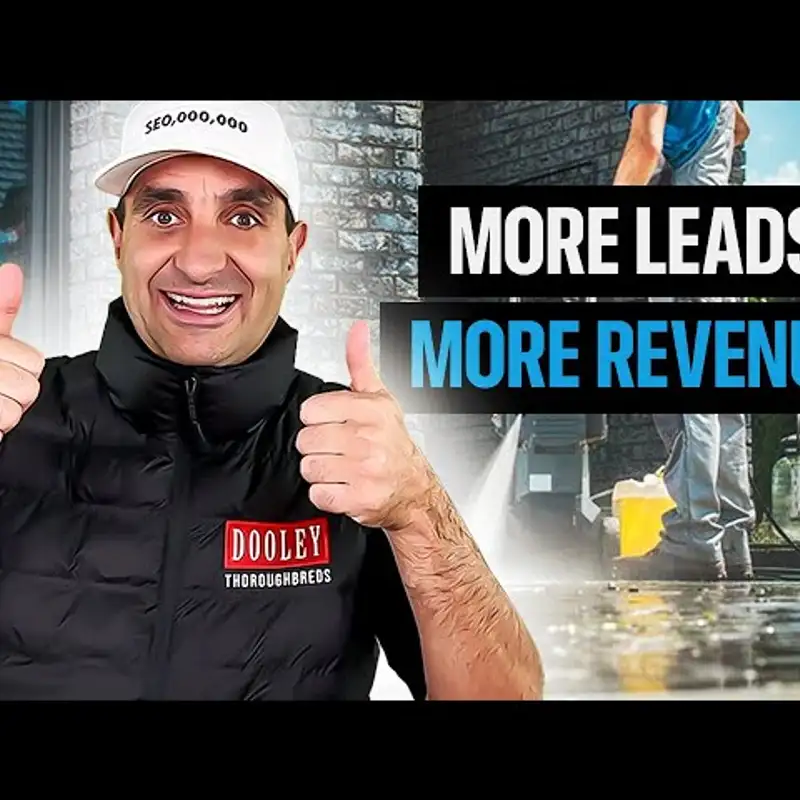
Scale Your Jet Washing Business with These Proven Strategies
James Dooley:
If you are a pressure washing company looking to scale enquiries and generate high-quality leads each day, this video is for you. Kasra and I have spoken to many businesses, and we know which marketing strategies work and which to avoid. So let’s break down strategy number one. Step one is setting up and optimising a Google Business Profile. If you already have one, reach out to all existing clients for as many five-star reviews as possible. Google Business Profiles are a great way to generate more leads. You should also build citations, post regularly, and upload photos. That’s definitely where I would start to boost local leads.
Kasra Dash:
Step two is strengthening your Google Business Profile with SEO-optimised service pages for each individual service on your website. Doing this helps the pages rank and increases the chance of your Google Business Profile showing up for those keywords, which means more phone calls.
James Dooley:
If you want more local leads, another option is PPC lead generation through Google or Bing. You target bottom-of-funnel keywords that drive enquiries. The challenge is working with a good PPC agency, because you need protection against click fraud and a strong negative keyword list. PPC works, but handled poorly it can waste money.
Kasra Dash:
After that, you’ve got Meta ads on Facebook and Instagram. When someone scrolls, they may see your ad. You can run lead forms, which are easy because no one leaves the platform, but lead quality can be poor unless you add qualifying questions. You can also run conversion ads that send people to your website to fill out a contact form. You have a couple of options depending on the quality you want.
James Dooley:
Another way to grow local leads is organic social media—posting regularly on Facebook, Twitter, YouTube, Pinterest, Instagram, Reddit, or Quora. If people ask questions and you answer them, it works well for lead generation.
Kasra Dash:
Organic social media is a volume game. You need to upload consistently—daily or weekly. For example, aim for five videos a week and stick to it. Platforms like YouTube or Twitter reward consistency.
James Dooley:
What’s your view on using AI agents—tools like automation platforms that crop videos and auto-publish across social media? Should companies team up with AI consultants to set them up?
Kasra Dash:
You can definitely automate posting with AI agents, but I’d also focus on AI search. Some people are slowly shifting from Google to tools like ChatGPT, Gemini, Claude, or Groq. If your brand isn’t showing up in those AI search engines, you’ll have trouble generating leads there too.
James Dooley:
If you want more business leads locally, I’d also team up with tradespeople websites like Checkatrade, Bark, Builder Builder, TrustATrader, or Rated People. These platforms generate local leads. Track your KPIs—cost per lead, cost per acquisition, and return on investment. We compare many of those platforms on our site, so check the links in the description. Since I’ve mentioned FatRank a few times, Kasra, what are your thoughts on lead generation companies compared to tradespeople sites?
Kasra Dash:
With lead generation companies, always do due diligence. Make sure they’ve generated leads in your niche before. Have a strategy call—share your budget and your ideal volume of leads. Ask whether the leads are exclusive to you or shared with others. Shared leads often turn into a race to the bottom on price, which is a common complaint from business owners who use sites like Bark or Checkatrade. These are things to clarify before partnering with a lead gen company.
James Dooley:
If anyone wants more local leads, I recommend heading to FatRank.com. We offer commission-based lead generation—you only pay a finder’s fee on converted jobs. You pay nothing upfront. Only when you complete and get paid for a job do you pay FatRank. Visit FatRank.com to see if you qualify. Expanding further: what are your thoughts on inbound versus outbound lead generation?
Kasra Dash:
I always prefer inbound. The conversion rate is far higher. The last stat I saw was around 16.1% converting into paying customers for inbound, compared to 1.4% for outbound.
James Dooley:
That’s about ten to twelve times higher. Outbound—cold calling, cold email, LinkedIn outreach—needs a lot of volume and often more staff. People think outbound leads are free, but you still pay for email tools and a sales team to convert them. Inbound is far better. Some people also ask whether real-time leads are important, meaning leads come through instantly. Are real-time leads essential?
Kasra Dash:
Yes, they’re very important. The stat we saw internally was that real-time leads convert about 63% higher. We found that responding in under a minute produced the best results. We used to think five minutes was enough, but under a minute made a big difference—calling or emailing immediately. Not every company needs a one-minute response time, but many fall short; for example, some go on holiday for five days with no one to answer leads. These are nuances we look at when partnering with companies.
Creators and Guests